

John Oakes
Q: Is there any Historical Evidence Outside the Bible that Pilate Placed Guards Outside Jesus' Tomb?
Question:
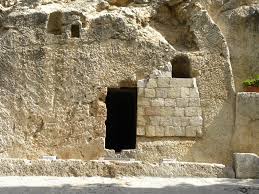 Other than the Bible, do we have any historical evidence that Jesus was put in a tomb by Joseph of Arimathaea and that Pilate placed guards around the tomb?
Q: How do I Explain to a Catholic Friend why the Apocrypha is Not Part of the Bible Canon?
Question:
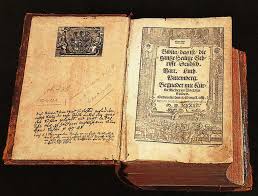 How do you explain to anyone, specifically Catholics, the canonization of the Bible and the fact that the Apocrypha is not part of the canon?
Q: Does Joshua 15:63 Contradict Joshua 3:10 Concerning the Jebusites?
Question:
In Joshua 3:10 the Bible says that God will drive out the Jebusites, but only a little later it says this: "As for the Jebusites the inhabitants of Jerusalem the children of Judah could not drive them out; but the Jebusites dwell with the children of Judah at Jerusalem unto this day." How can both verses be true?Q: Does the Existence of Evil Compromise God's Goodness & Omnipotence?
Question:
Can you explain how evil exists in the world without either compromising God's goodness, his omnipotence, and/or implying dualism? For instance, in Isaiah it is written "I form light and create darkness, I make evil and create woe; I the Lord do all these things," (45:7) everything is willed into existence by God "I have spoken and it will bring it to pass; I have planned and I will do it," (46:11) even those things that are considered to define evil in chapter 14. Genesis 2 describes all of God's creation as good, because he is good (James 1:17; Matthew 7:11; Exodus 34:6; Psalm 107:8; Mark 10:17-18). God is described as omnipotent (Romans 1:20; Genesis 17:1; Job: 42:2; Psalm 21:13; 71:18; 145:11; 147:5; Ephesians 1:21; Colossians 2:10). Additionally, God is described as eternal (Isaiah 45:17; 57:15; Psalm 45:17; 52:9; 90:2; Habbakuk 1:12; Deuteronomy 33:27; Luke 1:33; Hebrews 13:8; Revelation 4:9-10) so it is arguable that human will cannot be considered responsible for evil because of his omniscience (Hebrews 4:13; Acts 15:18; Job 12:13; Proverbs 2:6; Psalm 147:4-5; 33:13-15) and aseity (John 5:26; Acts 17:24-25; Daniel 4:35; Psalm 115:3; Job 42:2), infinity (Psalm 147:5; 145:3; Job 5:9), not dependent upon the sequential progression of time. Lastly, given his moral purity (Psalm 145:17; 1 Samuel 6:20; Psalm 89:35; Amos 4:2; 1 Peter 1:15-16; Hebrews 7:26) goodness (James 1:17; Matthew 7:11; Exodus 34:6; Psalm 107:8; Mark 10:17-18), and omnipresence in his creation (Romans 8:9; Matthew 6:9; Jerermiah 23:23-24; Psalm 139:7-12; Acts 17:27-28; John 1:3, 10), why does evil exist?If so, how, without contradicting any of these qualities, and what is its source in his creation by ex nihilo and characterized by order, not chaos? Consequently, if evil does exist, how does this not imply God is composite instead of simple with regard to his attributes?
Q: Is Daniel 2:43 a Prophecy about the Ptolemies and Seleucids and Daniel 11:6, 17?
Question:
We have met in Berlin. This is a topic that seems to have stuck with me since being a teenager (I am 34 now) and I would be very glad if I could have some exchange with you on this. To equate the first three empires of Daniel 2 as Babylon, Medo-Persia and Greece is beyond doubt. I also agree that the fourth kingdom is Rome for reasons you wrote about in your book (Daniel, Prophet to the Nations from www.ipibooks.com), but I can't make sense of the following yet: Last year, I observed the seemingly parallel prophecies of Dan 2:43 and 11:6, 17, the latter talking about specific, historically recorded intermarriages of Ptolemy and Seleucid kings. "As you saw the iron mixed with soft clay, so they will mix with one another in marriage (Footnote: Aramaic by the seed of men), but they will not hold together, just as iron does not mix with clay." (Daniel 2:43 ESV) Why does Daniel 2:43 seem to be parallel to Daniel 11:6, 17 while Daniel 2:40-45 should actually talk about Rome and not the Ptolemy/Seleucid divided kingdom? What is the fulfilment of Daniel 2:43 in the Roman empire? I have an idea about it but am not completely satisfied: Many peoples were unified under Roman rule and married amongst each other but that still didn't make the Roman empire a solid united nation at the end. I think that this explanation is weaker than the link between Daniel 2:43 and Daniel 11:6,17. What do you think about this?Q: Does the Type/Antitype in 1 Peter 3 Mean We Are Saved at Baptism?
Question:
I have become fascinated with the shadow and reality relationship between the Old Testament and New Testament. I just bought your book From Shadow to Reality and look forward to reading it. It had a link to this website, so here I am. I have a question/thought that I would appreciate your thoughts on if you have the time. In 1 Peter 3:21 Peter speaks of baptism as an antitype. I raised the point in a lesson I taught (baptism saves, from the beginning it was so) that if baptism is the antitype, then what is the type? If baptism is the real thing, what is the shadow? If I understand Peter correctly, he said it was salvation by water, since eight souls were saved by water. Of course we know he is talking about the flood, ark, etc. I made the comment in my lesson that it seems to me that if baptism does not save us today, (which so many claim to be so) then Noah and his family were not saved in the flood. It seems that something cast that shadow (salvation by water), and Peter said it was salvation in water during baptism. You can't have a shadow without the reality which casts it. Unfortunately, not too many seemed to understand what I was saying. Maybe I didn't explain it very well, or maybe I just don't understand. I would appreciate your thoughts if you have the time to respond. Am I missing something here?
Q: Is Paul the Thirteenth Apostle?
Question:
 In my study this morning I came across your Q/A about Paul (the apostle). You say that John does not mention him in Revelation. John started the church in Ephesus and it was later "taken over" or "led" by Paul. This led me to a quandry. First, Paul would make the apostles number grow to 13. Second, Paul is only directly mentioned by Luke, the author of the gospel of Luke and Acts. Luke mentioned Paul in his Gospel and the book of Acts. This brought me to the Book of Revelation that is attributed to John. Revelation speaks of 12 foundations of the church. not 13. It also regards the number 13 as rebellion and lawlessness. Surely, then, there cannot be 13 apostles. Paul also talks about "lawlessness" in his teachings, comparing salvation of those under the law and by works. Do you think John was talking about Paul in Revelation 2:2?
Q: Is Your Belief that God Intervened in Evolution a Cop Out?
Question:
 Do you know that a theory scientifically is a fact? Don't confuse theory's perjorative and colloquial use with its actual definition. Also, just to state the obvious, referencing your q&a on evolution... Introducing supernatural forces makes everything easier. Duh. That fairies took my box of halloween decorations and hid it underneath a box of old clothes in the basement is simpler and easier to describe how it happened rather than trying to remember why (put it there when I last reorganized the basement). However this neither makes it true or reasonable. An easy explaination is a cop out. Sorry.
Q: Why is Hebrew like Ugaritic, a Semitic language, if the Jews are Hamitic?
Question:
 Why is the Canaanite language, Ugaritic specifically, so similar to Hebrew? The words such as Yam (Sea) Mot (Death) and Yarikh (Moon) are found exactly the same in Ugaritic and Hebrew writings. If the Canaanites are a Hamitic people, why is their language classified as semitic? Is it possible that the Israelites borrowed or even worse, stole from the Ugaritic people's language? Here is this article I found on the subject. Feel free the read it. Thanks.
Q: Can Extremely Hard Situations Justify Sinning?
Question:
 I have a question regarding practical Christianity in light of these verses:
For He says to Moses, "I will have mercy on whom I have mercy, and I will have compassion on whom I have compassion." So then it does not depend on the man who wills or the man who runs, but on God who has mercy. - Romans 9:15-16. He who finds a wife finds what is good and receives favor from the Lord.- Proverbs 18:22 Keep deception and lies far from me, Give me neither poverty nor riches; Feed me with the food that is my portion, That I not be full and deny You and say, "Who is the LORD?" Or that I not be in want and steal, And profane the name of my God. - Proverbs 30:8-9
We know the Lord does give jobs, marriages, healthy environments to some people, both Christians and non Christians and these situations seem to correlate at least to some extent with more stable morals and less crime rate or health concerns. But what is expected of those who have been unemployed for several years and unable to support his family or find a wife? Basically, what I am asking is: what if we do not have God's mercy, His compassion, His favor, or a way to support ourselves? Would the Lord then approve or at least understand that we need to do what we can to survive/ fulfill natural urges/ respond accordingly to these circumstances ( such as with stealing ,prostitution, anorexia, suicide)? So as Christians, is there some type of contextual standard that God takes into account as He is the one that places us in these different environments? Does a pastor and his middle class American family have a higher expectation to act according to the Bible than a poor orphan in a 3rd world country who needs to steal? These hypothetical verses have been slightly confusing. Thank you for any thoughts.