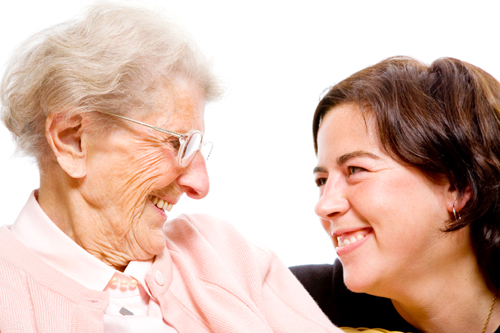
 Whether you are caring for a child with special needs, a family member with a chronic illness or aging parents, you will face numerous challenges.
Matthew 26:36-44
Then Jesus went with his disciples to a place called
Going a little farther, he fell with his face to the ground and prayed, "My Father, if it is possible, may this cup be taken from me. Yet not as I will, but as you will."
Then he returned to his disciples and found them sleeping. "Could you men not keep watch with me for one hour?" he asked Peter. "Watch and pray so that you will not fall into temptation. The spirit is willing, but the body is weak."
He went away a second time and prayed, "My Father, if it is not possible for this cup to be taken away unless I drink it, may your will be done."
When he came back, he again found them sleeping, because their eyes were heavy. So he left them and went away once more and prayed the third time, saying the same thing.
2 Peter 1:3
His divine power has given us everything we need for life and godliness through our knowledge of him who called us by his own glory and goodness.
In these scriptures you see the reality and heaviness of the “cup” you must sometimes drink, as well as the promise that God will provide in your times of need.
Whether you are caring for a child with special needs, a family member with a chronic illness or aging parents, you will face numerous challenges. Through the scriptures, prayer and wise counsel, you will need to ask yourself as you encounter such difficulties:
- Who am I going to be?
- How will I respond to God?
- What will my attitude be with my family?
- How much will I rely on the fellowship?
I have learned many lessons from my own journey, as well as from those of other caretakers. Here are several methods that have helped me as well as those other caretakers.
- Take care of yourself. What am I feeling? Worry, sadness, anger, overwhelmed, denial, guilt, loss of dreams? Identify the feelings you’re experiencing.. Know what your strengths and weaknesses are. Make sure you are getting enough sleep, exercise and eating healthy. Build spiritual renewal time into your daily schedule. Find happy moments through difficult circumstances! Remember your marriage and other intimate family relationships and spiritual relationships that nurture you.
- Navigate into new territories: Talk to a friend/counselor/therapist/doctor. Get group input (in person or, online). Do legal planning. Read books regarding the medical issues you face. Balance your financial responsibilities and ask for guidance from trusted advisors. Use journaling as an outlet. Don’t feel guilty about saying "no.” Learn to advocate for yourself and your loved one. If paperwork is too painful emotionally, see if you can find a close loved one or spiritual support person willing to help you with it. Spend time finding resources and planting conversation seeds. You never know where God will send help your way. Talk about it when you don’t feel like it, because those seeds must be planted in order to grow up and nourish your soul.
- When you are in the thick of it ask yourself - What am I going to choose as my response? God's Word has the answers. Acts 17:26, 1 Corinthians 10:13
- Get support at every level: professional, group, friends and family. Shed relationships that emotionally drain you. Take care of your loved one and guard your heart right now. Surround yourself with those who lighten your burden.
| Helping others who are caretakers | Receiving help from others |
| Pray and let them know you prayed (in a card) | Have close friend(s) be the "point" person. |
| Offer to make a meal on a specific day and ask about dietary needs. | Keep a list of needs so that when someone asks to help, you don't have to think too hard. |
| Offer to do a specific task (shopping, cleaning, babysitting, car pool...) | Don't feel like you have to reciprocate right away. Your time will come to help someone later. |
| Be a good listener. Don't try to solve their problems. | Remember to be thankful. Be like the one leper who returns to Jesus to say "thank you". |
| Helpful gift cards: gas, grocery stores, restaurants |
Questions to ask mental/medical health professional
- What is your specific background and training in my family member's mental/medical health?
- Have you treated children/seniors with problems similar to my family member's problem?
- What are my family member's treatment options?
- Which option do you recommend, and why?
- How long will it take for my family member's mood, medical issue or behavior to improve?
- How can I stay involved with my family member's treatment?
Questions to ask yourself regarding mental/medical professionals
- Has this mental/medical health professional explained everything to me in a way that helps me understand my family member's situation?
- Am I comfortable with this mental/medical health professional?
- Does this mental/medical health professional seem genuinely concerned and interested?
- Remember that in the end, you are paying this person for a professional service. If the service doesn’t measure up, find another professional.
Practical advice:
- Stay connected.
- Use sober judgment vs. distracting yourself from the painful situation with tasks to accomplish.
- Be flexible, willing to change routine or try new things.
- Let go when needed, allowing someone else to care for the person you love.
- Recognize and learn to celebrate any progress -- no matter how small.
- Embrace and find humor- it lowers blood pressure and stress levels by triggering endorphins.
- Protect your marriage relationship. Ask for and use respite care.
- Remember to take care of yourself! Continue to identify what you are feeling at the different stages you go through: Jealousy, fear of stigma, weary, trapped, hopeless, or bitterness.
Keep a spiritual outlook. Remember this life is temporary and there are GREATER THINGS THAN THESE.
- John 14:12, Isaiah 40:28-31, 2 Corinthians 12:10, 2 Corinthians 3:18, God's glory, gift, help others
- Don't minimize grief and loss.
- Receive and give grace.
- Do you have your rescue tube?
A story for your inspiration.
Welcome to Holland
I am often asked to describe the experience of raising a child with a disability – to try to help people who have not shared that unique experience to understand it, to imagine how it would feel. It's like this…
When you're going to have a baby, it's like planning a fabulous vacation trip – to Italy. You buy a bunch of guidebooks and make your wonderful plans. The Coliseum, Michelangelo’s David, the gondolas in Venice. You may learn some handy phrases in Italian. It's all very exciting.
After months of eager anticipation, the day finally arrives. You pack your bags and off you go. Several hours later, the plane lands. The flight attendant comes on the public announcement and says, "Welcome to Holland."
"Holland?!" you say. "What do you mean, Holland? I signed up for Italy! I'm supposed to be in Italy. All my life I've dreamed of going to Italy.”
But there's been a change in the flight plan. The plane has landed in Holland, and you must stay there.
The important thing is that they haven't taken you to some horrible, disgusting, filthy place, full of pestilence, famine and disease. It's just a different place than you had expected.
So you must go out and buy a new guidebook. And you must learn a whole new language. And you will meet a whole new group of people you would never have met.
It's just a different place. It's slower paced than Italy, less flashy than Italy. But after you've been there for a while and you catch your breath, you look around, and you begin to notice that Holland has windmills, Holland has tulips, Holland even has Rembrandts.
But everyone you know is busy coming and going from Italy, and they're all bragging about what a wonderful time they had there. And for the rest of your life you will say, "Yes, that's where I was supposed to go. That's what I had planned."
The pain of that will never, ever, go away, because the loss of that dream is a very significant loss.
But if you spend your life mourning the fact that you didn't get to Italy, you may never be free to enjoy the very special, the very lovely things about Holland.
Written by Emily Pearl Kingsley
Welcome to Holland (Part 2), by Anonymous
I have been in
I reflect back on those years of past when I had first landed in
I worked hard. I bought new guidebooks. I learned a new language and I slowly found my way around this new land. I have met others whose plans had changed like mine, and who could share my experience. We supported one another and some have become very special friends.
Some of these fellow travelers had been in
I think that
Sure, this journey has been more challenging and at times I would (and still do) stomp my feet and cry out in frustration and protest. And, yes,
I have come to love
I have become a world traveler and discovered that it doesn't matter where you land. What's more important is what you make of your journey and how you see and enjoy the very special, the very lovely, things that
Yes, over a decade ago I landed in a place I hadn't planned. Yet I am thankful, for this destination has been richer than I could have imagined!
Book recommended by Susan Traganos: Trusting God when Life Hurts, by Jerry Bridges